
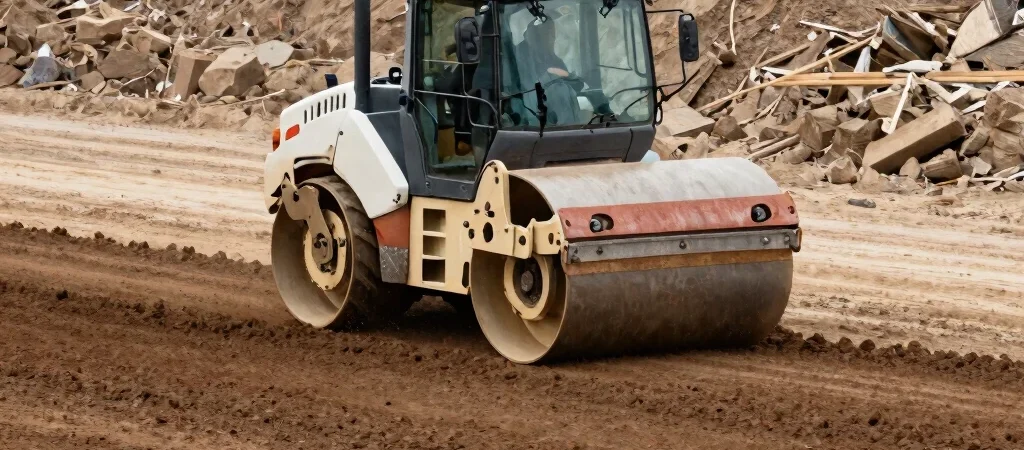
A compacted fill surface may look firm underfoot, but appearance alone cannot confirm that it meets the project specification. Compaction is the process of reducing air voids in soil by applying mechanical effort. The result depends on more than the machine: material type, moisture condition, and the thickness of each placed layer all matter.
Start With the Material
Granular fill and fine-grained soils do not respond to compaction in exactly the same way. Before work begins, check the approved material requirements and whether the delivered soil is suitable for the intended fill. A change in source or soil character is a reason to consult the project requirements, not to assume the same rolling routine will work.
Pay Attention to Moisture
Soil that is too dry or too wet can be difficult to compact effectively. Water may need to be added and mixed through the lift, or the material may need time and handling to reach a workable condition. The goal is not to make the surface look damp; it is to follow the moisture guidance and verification approach specified for the job.
Compact in Manageable Lifts
Fill is typically placed in layers, often called lifts, so compaction effort can reach through the material rather than only tighten the top. The permitted lift thickness depends on the project requirements, soil, and equipment, so use the specified value rather than a general rule of thumb. Keep the surface reasonably even and avoid covering a lift that still needs inspection or testing.
Let Testing Confirm the Work
The number of roller passes is not, by itself, proof of acceptance. Where the project calls for field testing, the test method and acceptance criteria determine whether the compacted layer is ready for the next step. A useful field habit is to coordinate the testing location and timing before placing the next lift, while the work is still accessible.