
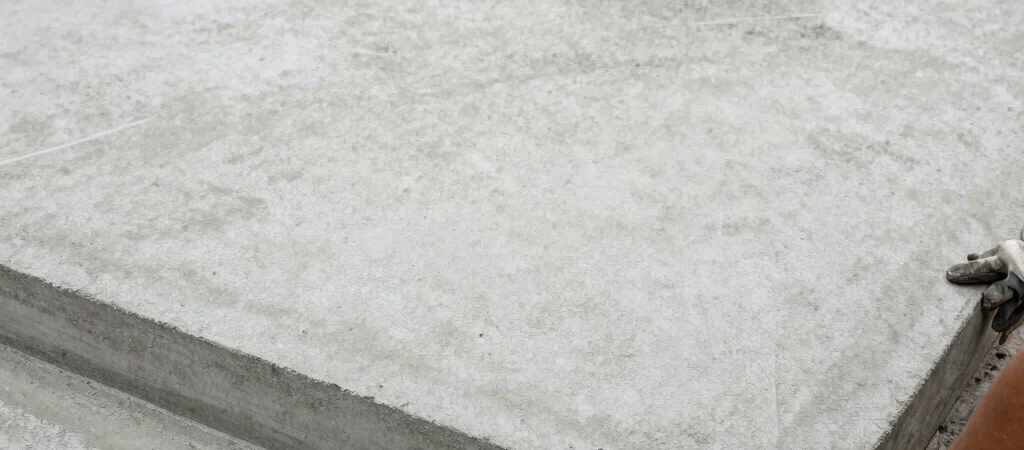
The surface has been struck off and the crew is ready to move on, but the concrete’s early care is just beginning. Curing means managing moisture and temperature conditions so the cement can continue reacting with water. It is not a finishing step, and it should be planned before the pour rather than improvised afterward.
Why Early Care Matters
Concrete gains strength through hydration, a chemical reaction between cement and water. If the surface loses moisture too quickly, or conditions expose it to unsuitable temperatures, the near-surface concrete can be affected. Wind, sun, and dry air can make a slab more vulnerable to rapid moisture loss, so the weather belongs in the conversation before placement.
Choose a Method for the Work
Common approaches include covering concrete with wet materials, using plastic sheeting, or applying a curing compound that forms a moisture-retaining film. Each has practical limits: coverings need to be kept in place and managed, while compounds must suit the next operation and the project requirements. The construction documents and the responsible project team should guide the choice.
Make the Plan Visible
On site, curing works best when someone knows who will start it, what method will be used, and how it will be maintained. A slab exposed to direct sun may need a different level of attention than a protected interior placement, but the specification remains the governing reference. Record the method and check that the protection stays effective instead of assuming one application settles the matter.
Think Beyond the Pour
Curing is part of concrete work, not an optional afterthought once the surface looks complete. Before a placement, read the curing requirements alongside the placement and weather plan, then make sure the needed materials are on hand. That small piece of preparation helps connect what is specified on paper with what happens to the concrete on site.